M18A1 Claymore Field Manual
M18A1 Claymore Field Manual
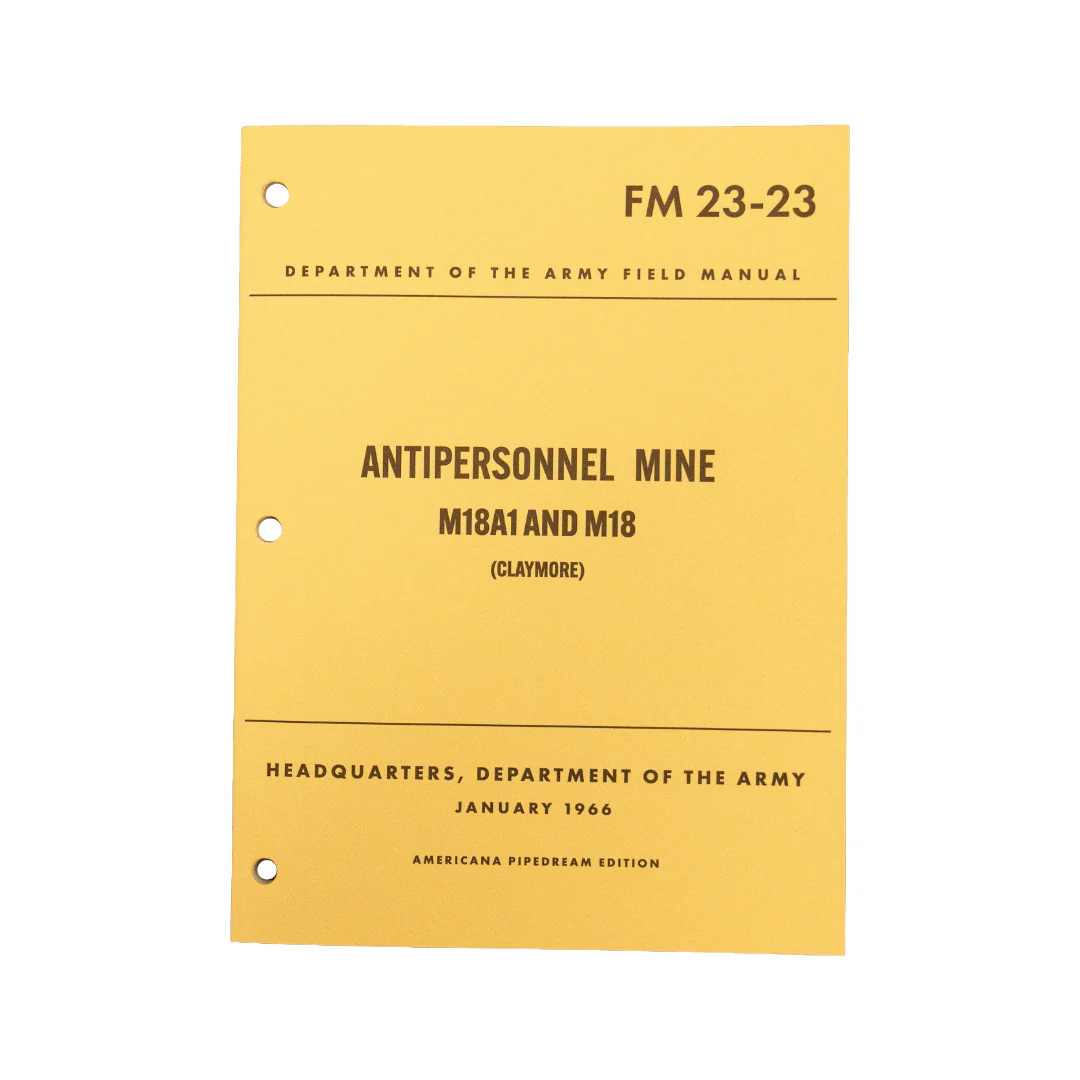
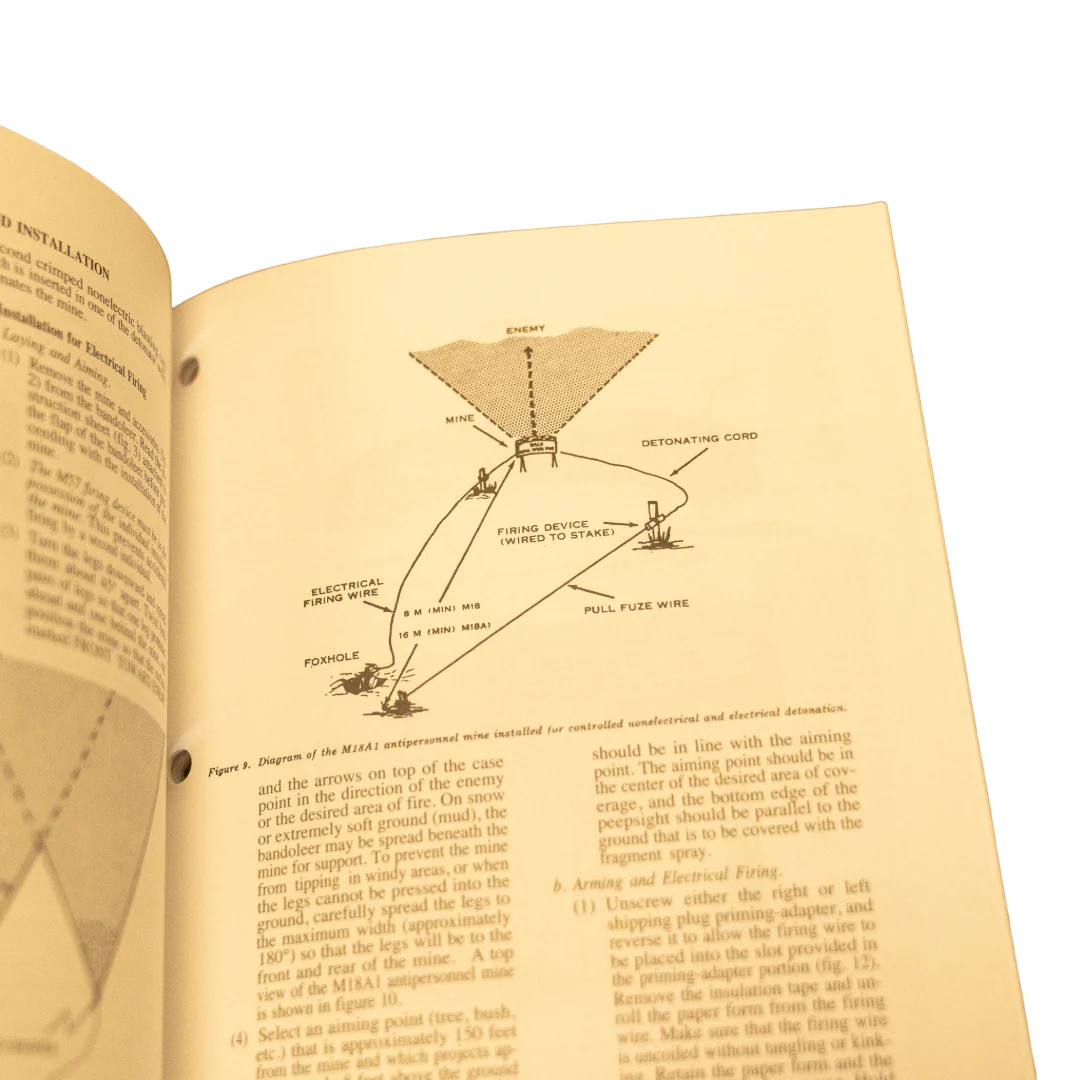
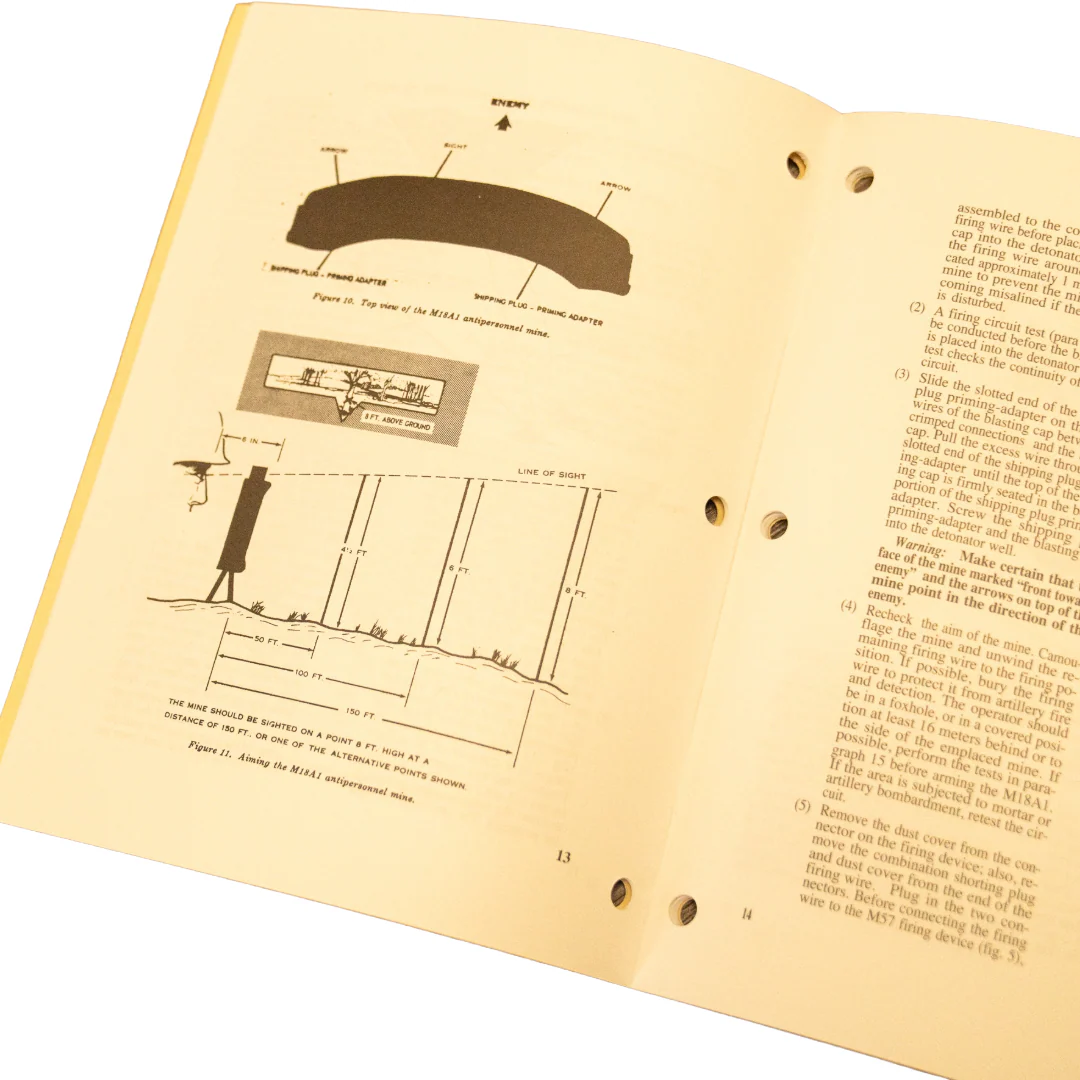
This is FM 23-23, the U.S. Army's field manual on the M18A1 Claymore antipersonnel mine. The Claymore traces back to the Korean War, when massed infantry assaults pushed the Army and Canadian designers to look for a directional weapon that could stop large numbers of attackers at once.
Canadian engineer Norman MacLeod developed the basic concept around 1952, and after refinement by Picatinny Arsenal and Aerojet, the improved M18A1 was type-standardized in 1960. It saw its first combat use in Vietnam in 1966 and became one of the most widely issued and recognized weapons of that war.
The mine itself is instantly identifiable: a curved, olive-drab case embossed with "FRONT TOWARD ENEMY," packing roughly 700 steel balls in front of a C-4 charge, designed to send fragments out in a 60-degree fan. FM 23-23 is the manual that trained soldiers on its characteristics, employment, and safe handling, and it was updated twice after its original release, Change 1 in 1968 and Change 2 in 1973, as the mine and its training materials evolved.
This is a document for historical study, not a current operator's manual. It's a natural pick for Vietnam War militaria collectors, ordnance and small-arms history enthusiasts, and anyone who already owns an inert display Claymore or Claymore bag and wants the paperwork that originally went with it.
The Short & Sweet:
- Field Manual 23-23, U.S. Army doctrine on the M18A1 Claymore mine
- Covers the mine's design, history, and training use
- Updated twice after original release: Change 1 (1968), Change 2 (1973)
- Historical reference document, not a current operator's manual
- Pairs well with Claymore bags and other Vietnam-era militaria
33 pages. 7.5" width, 10" length.
Original: $144.00
-70%$144.00
$43.20Product Information
Product Information
Shipping & Returns
Shipping & Returns
Description
M18A1 Claymore Field Manual
This is FM 23-23, the U.S. Army's field manual on the M18A1 Claymore antipersonnel mine. The Claymore traces back to the Korean War, when massed infantry assaults pushed the Army and Canadian designers to look for a directional weapon that could stop large numbers of attackers at once.
Canadian engineer Norman MacLeod developed the basic concept around 1952, and after refinement by Picatinny Arsenal and Aerojet, the improved M18A1 was type-standardized in 1960. It saw its first combat use in Vietnam in 1966 and became one of the most widely issued and recognized weapons of that war.
The mine itself is instantly identifiable: a curved, olive-drab case embossed with "FRONT TOWARD ENEMY," packing roughly 700 steel balls in front of a C-4 charge, designed to send fragments out in a 60-degree fan. FM 23-23 is the manual that trained soldiers on its characteristics, employment, and safe handling, and it was updated twice after its original release, Change 1 in 1968 and Change 2 in 1973, as the mine and its training materials evolved.
This is a document for historical study, not a current operator's manual. It's a natural pick for Vietnam War militaria collectors, ordnance and small-arms history enthusiasts, and anyone who already owns an inert display Claymore or Claymore bag and wants the paperwork that originally went with it.
The Short & Sweet:
- Field Manual 23-23, U.S. Army doctrine on the M18A1 Claymore mine
- Covers the mine's design, history, and training use
- Updated twice after original release: Change 1 (1968), Change 2 (1973)
- Historical reference document, not a current operator's manual
- Pairs well with Claymore bags and other Vietnam-era militaria
33 pages. 7.5" width, 10" length.